
Depression treatment is not the same for everyone. While traditional antidepressants help many people manage their symptoms, others experience limited improvement, unwanted side effects, or persistent depression despite trying different medications.
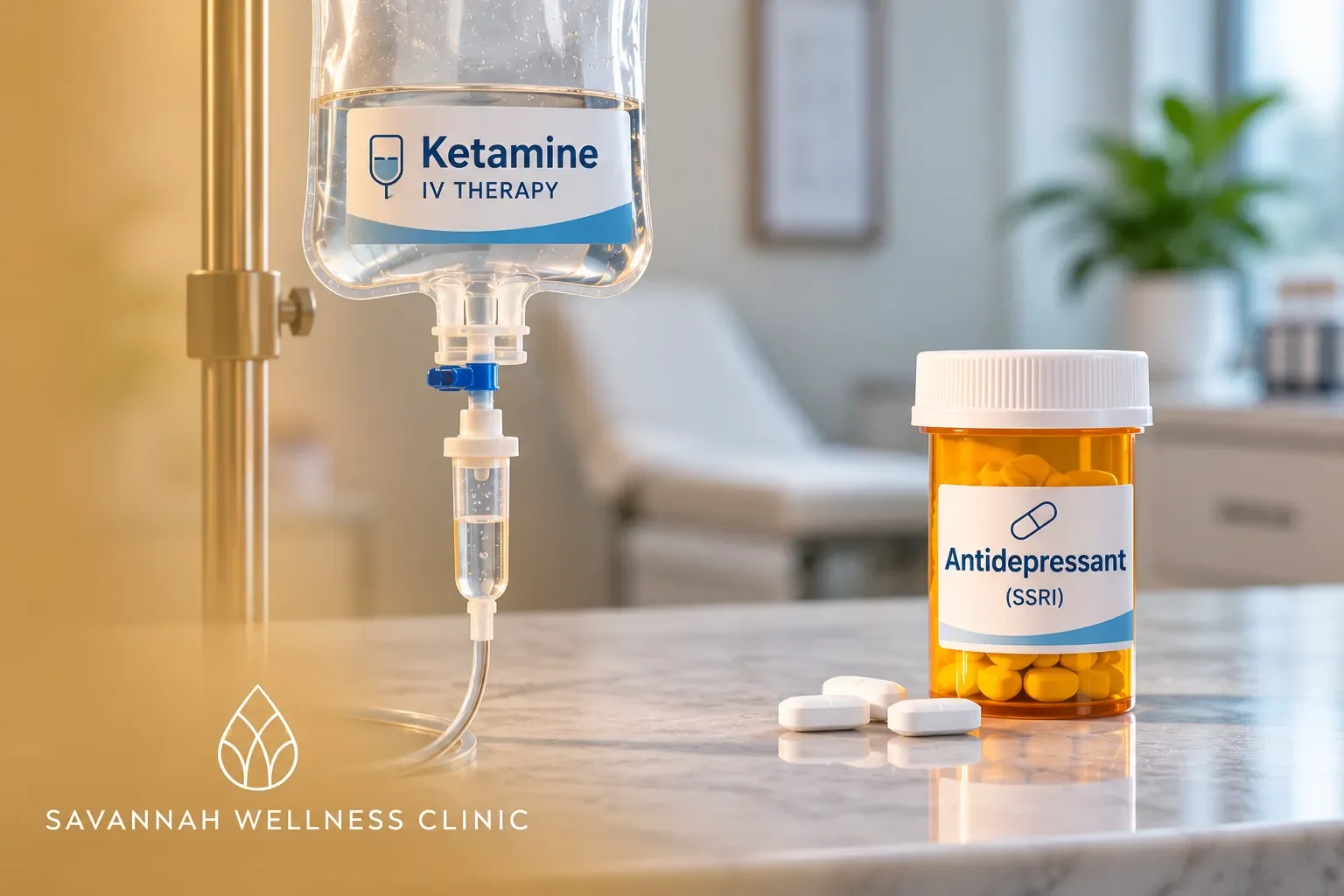
For patients exploring additional treatment options, the comparison of ketamine vs antidepressants raises important questions. How do these treatments work differently? Does ketamine act faster than SSRIs? Can someone receive ketamine therapy while continuing their prescribed antidepressants?
Although both approaches may be used in depression care, they differ in how they affect the brain, how treatment is administered, and the medical considerations involved.
Understanding these differences can help patients make more informed decisions with their healthcare providers.
How Do Traditional Antidepressants Work?
Traditional antidepressants are commonly prescribed medications used to treat depression and certain other mental health conditions.
One widely used category is selective serotonin reuptake inhibitors (SSRIs), which include medications such as sertraline, fluoxetine, and escitalopram.
SSRIs primarily work by reducing the reabsorption of serotonin, a neurotransmitter involved in mood regulation. Other antidepressants, including serotonin-norepinephrine reuptake inhibitors (SNRIs), affect additional neurotransmitter systems.
These medications are generally taken daily, and their full therapeutic effects may take several weeks to evaluate.
Traditional antidepressants can be effective for many patients. However, treatment response varies, and some individuals may require medication adjustments, psychotherapy, or other approaches.
Potential side effects can include nausea, changes in sleep, sexual dysfunction, and gastrointestinal symptoms. Specific risks depend on the medication, dosage, and individual medical history.
How Does IV Ketamine Therapy Work Differently?
The primary difference between ketamine and SSRIs involves the neurotransmitter systems they affect.
While SSRIs primarily influence serotonin signaling, ketamine acts on the brain's glutamate system.
Ketamine blocks N-methyl-D-aspartate (NMDA) receptors, influencing neural signaling pathways involved in mood regulation and neuroplasticity, which refers to the brain's ability to adapt and form connections.
Researchers continue to investigate how these effects contribute to ketamine's antidepressant properties.
This different mechanism is one reason IV ketamine therapy has received attention in research involving treatment-resistant depression.
However, a different mechanism does not automatically mean ketamine is more effective or appropriate for every patient.
IV Ketamine Therapy vs. Esketamine Nasal Spray
It is important to distinguish IV ketamine therapy from esketamine nasal spray because they are different treatments.
IV ketamine therapy involves administering ketamine through an intravenous infusion under medical supervision. Although ketamine is FDA-approved for certain anesthetic uses, its use for depression is considered off-label.
Esketamine nasal spray, marketed as Spravato, is a related medication with FDA approval for specific depression indications, including treatment-resistant depression in adults. It has separate prescribing, administration, and monitoring requirements.
Both treatments require appropriate clinical oversight, but they should not be considered interchangeable.
At Savannah Wellness Clinic, our ketamine service focuses on physician-led evaluations and IV ketamine therapy in Savannah, GA, when clinically appropriate.
Ketamine vs. SSRIs: What Are the Main Differences?
When comparing ketamine therapy vs traditional antidepressants, several differences are worth understanding.
1. How They Affect the Brain
SSRIs primarily influence serotonin signaling, while ketamine acts on the glutamate system through NMDA receptors.
These different mechanisms may help explain why some patients who have not responded adequately to conventional antidepressants are considered for ketamine-based treatments.
However, the relationship between neurotransmitter activity and depression is complex. Neither treatment works through a single isolated process.
2. How Quickly Patients May Respond
Traditional antidepressants generally require consistent daily use, and clinicians often assess their full effects over several weeks.
In clinical studies, some patients receiving ketamine-based treatment have experienced reductions in depressive symptoms within hours or days.
However, not everyone responds to ketamine, and rapid improvement is not guaranteed.
3. How Treatment Is Administered
SSRIs and many other antidepressants are usually taken orally at home according to a prescribed schedule.
IV ketamine therapy is administered through an intravenous infusion in a supervised medical setting.
Because ketamine can temporarily affect perception, blood pressure, coordination, and alertness, appropriate monitoring is an important part of treatment.
4. When Treatment May Be Considered
Traditional antidepressants are commonly used as initial treatments for depression.
Ketamine-based treatments are generally considered for selected patients, particularly when previous treatments have not provided adequate improvement.
The decision depends on diagnosis, treatment history, medical conditions, current medications, and individual risks.
5. Long-Term Treatment Planning
Antidepressants may be continued over an extended period when appropriate, with regular follow-up and medication reviews.
The duration of benefit following ketamine treatment can vary. Some patients experience temporary improvement, and additional treatment or other ongoing care may be considered.
A physician should discuss the available evidence, uncertainties, and follow-up requirements before recommending treatment.
Is Ketamine Better Than Antidepressants for Depression?
One of the most common questions patients ask is whether ketamine is better than antidepressants.
The answer depends on the individual and the clinical situation.
Traditional antidepressants have extensive research supporting their effectiveness and remain important treatment options for many people.
Ketamine-based treatments have also demonstrated antidepressant effects in clinical studies, particularly among selected patients with treatment-resistant depression.
One potential advantage is the possibility of a faster initial response.
However, faster improvement does not necessarily mean better long-term outcomes.
Some patients may respond well to conventional antidepressants, while others may benefit from discussing additional treatment approaches.
A medical evaluation is necessary to determine which options are reasonable for a particular patient.
Ketamine vs. SSRIs for Treatment-Resistant Depression
Treatment-resistant depression generally describes depression that has not improved adequately after at least two appropriate antidepressant trials, although definitions can vary.
Patients with treatment-resistant depression may have already tried different medications, dosages, or combinations of treatments.
When conventional approaches have not provided sufficient improvement, a healthcare professional may discuss additional options.
These can include medication adjustments, psychotherapy, augmentation strategies, electroconvulsive therapy (ECT), or ketamine-based treatment.
Because ketamine affects different neural signaling pathways from SSRIs, it may represent another treatment approach for selected patients.
However, treatment-resistant depression does not automatically mean someone is a suitable candidate for IV ketamine therapy.
A physician must consider the patient's medical history, psychiatric history, previous treatments, current medications, and potential risks before making a recommendation.
How Quickly Can IV Ketamine Therapy Work Compared With Antidepressants?
The difference in treatment timelines is one of the most discussed aspects of ketamine vs antidepressants.
SSRIs may begin producing noticeable changes during the first few weeks, but their full effects often require additional time to assess.
In contrast, clinical research has shown that ketamine can produce relatively rapid antidepressant effects in some patients.
Some studies have reported improvement within hours or days after administration.
However, these findings do not mean every patient will experience rapid relief.
The duration of improvement also varies, and a positive initial response may not persist.
Researchers continue to investigate how ketamine's antidepressant effects can be maintained and which patients are most likely to benefit.
Patients considering IV ketamine therapy should discuss realistic expectations, available evidence, and follow-up planning with their physician.
Can You Take Ketamine While on Antidepressants?
Many people exploring IV ketamine therapy are already taking prescribed antidepressants.
A common question is whether ketamine can be administered while someone continues an SSRI, SNRI, or another antidepressant medication.
In some clinical settings, ketamine treatment may be provided while patients continue their existing antidepressants.
However, this does not mean every medication combination is appropriate.
A physician should review the patient's complete medication list, medical conditions, and potential interactions before treatment.
Can You Take Ketamine While on SSRIs?
Concurrent use of ketamine and SSRIs may be possible under appropriate medical supervision.
Because these medications have different primary mechanisms, taking an SSRI does not automatically exclude someone from ketamine treatment.
Nevertheless, individual medication interactions and safety considerations still matter.
Patients should tell their physician about all prescription medications, over-the-counter products, and supplements they use.
Does Ketamine Interact With SSRIs?
Potential interactions depend on the specific medications and the patient's health.
Clinicians may need to consider:
The particular antidepressant and dosage
Other medications that cause sedation
Blood pressure and cardiovascular conditions
Drugs that affect ketamine metabolism
Relevant psychiatric and medical history
Other medications with potential interaction risks
Some combinations require additional caution, including certain medications that may affect cardiovascular responses.
Never stop, reduce, or change prescribed antidepressants before ketamine treatment unless your prescribing clinician instructs you to do so.
Can Ketamine Cause Serotonin Syndrome?
Serotonin syndrome is a potentially serious condition associated with excessive serotonergic activity, usually involving certain medications or medication combinations.
Ketamine is not primarily a serotonin reuptake inhibitor, and taking an SSRI does not automatically mean ketamine will cause serotonin syndrome.
However, medication safety should always be assessed individually, especially when multiple serotonergic medications are involved.
Symptoms such as significant agitation, confusion, fever, muscle rigidity, or abnormal changes in heart rate and blood pressure require urgent medical attention.
A complete medication review helps clinicians identify relevant risks before considering treatment.
Can Ketamine Replace Traditional Antidepressants?
Ketamine is not necessarily a replacement for traditional antidepressant medication.
For some patients, ketamine-based treatment may be considered as part of a broader depression care plan.
Others may need continued antidepressant treatment, psychotherapy, or additional medical support.
Whether medications should be adjusted depends on the patient's diagnosis, treatment response, medical history, and prescribing clinician's judgment.
Stopping antidepressants abruptly can lead to withdrawal symptoms or a recurrence of depression.
Patients should never discontinue prescribed medication simply because they are considering IV ketamine therapy.
The goal is to identify an appropriate treatment plan, not automatically replace one medication with another.
What Are the Potential Risks and Side Effects of IV Ketamine Therapy?
Like traditional antidepressants, IV ketamine therapy has potential risks and side effects.
Because ketamine affects perception, alertness, and cardiovascular function, treatment requires appropriate medical screening and monitoring.
Possible effects during or after an infusion include:
Temporary increases in blood pressure or heart rate
Nausea or dizziness
Sedation or drowsiness
Dissociation or changes in perception
Temporary difficulties with coordination or concentration
Changes in mood or emotional experience during treatment
Ketamine also has misuse potential, and repeated exposure may carry additional health risks.
Certain medical or psychiatric conditions may make ketamine treatment inappropriate or require further evaluation.
Patients should understand the potential benefits, limitations, and risks before deciding whether to proceed.
Who May Be a Candidate for IV Ketamine Therapy?
IV ketamine therapy may be considered for selected patients whose depression has not responded adequately to conventional treatments.
However, treatment eligibility cannot be determined from symptoms alone.
A physician evaluation may include:
Reviewing your diagnosis and current symptoms
Discussing previous antidepressant trials and other treatments
Evaluating current medications and possible interactions
Reviewing cardiovascular and general medical health
Considering relevant psychiatric history and substance use risks
Discussing treatment goals, alternatives, and expectations
Not every patient who experiences persistent depression will be an appropriate candidate.
A careful medical assessment helps determine whether IV ketamine therapy warrants further consideration.
IV Ketamine Therapy in Savannah, GA and Surrounding Areas
If you're comparing ketamine therapy with traditional antidepressants, speaking with a physician can help you better understand your treatment options.
At Savannah Wellness Clinic, we offer IV ketamine therapy in Savannah, GA, with physician-led evaluations, individualized treatment planning, and monitored treatment sessions when clinically appropriate.
Our Savannah clinic welcomes patients from surrounding coastal Georgia and South Carolina communities, including Brunswick, Hilton Head Island, Bluffton, and Beaufort.
During your consultation, a physician will review your medical history, previous treatments, current medications, and relevant health concerns to determine whether IV ketamine therapy may be appropriate for you.
All consultations and treatments take place at our Savannah location.
Frequently Asked Questions About Ketamine vs. Antidepressants
What is the main difference between ketamine and SSRIs?
SSRIs primarily affect serotonin signaling, while ketamine acts on the glutamate system through NMDA receptors. These differences influence how the treatments work, how they are administered, and their clinical applications.
Is ketamine better than traditional antidepressants?
Not necessarily. Ketamine-based treatments may benefit selected patients, particularly those with treatment-resistant depression, but traditional antidepressants remain effective for many people. Treatment decisions depend on individual medical circumstances.
Can you do ketamine therapy while taking antidepressants?
Some patients receive ketamine treatment while continuing prescribed antidepressants. However, a physician must review potential medication interactions, medical history, and individual risks before determining whether concurrent treatment is appropriate.
Can you take ketamine while on SSRIs?
In some cases, ketamine may be administered while a patient continues an SSRI under medical supervision. Patients should never change their prescribed medication schedule without guidance from their prescribing clinician.
Does ketamine work faster than SSRIs?
Clinical studies have shown that some patients experience antidepressant effects from ketamine within hours or days. SSRIs typically require several weeks for a fuller assessment of their effects. Individual responses vary, and rapid improvement is not guaranteed.
Can ketamine replace antidepressants permanently?
There is no guarantee that ketamine can permanently replace antidepressant medication. Long-term treatment decisions depend on individual response, clinical needs, and physician recommendations.
Is IV ketamine therapy FDA-approved for depression?
Ketamine is FDA-approved for certain anesthetic uses, but IV ketamine treatment for depression is an off-label application. Intranasal esketamine is a separate medication with FDA approval for specific depression indications.
Where can I discuss IV ketamine therapy near Savannah, GA?
Savannah Wellness Clinic offers in-person consultations for patients interested in IV ketamine therapy at 310 Eisenhower Drive, Building 3, Savannah, GA 31406. Patients from Savannah and surrounding communities can request an appointment to discuss whether treatment may be appropriate.
Making an Informed Decision About Depression Treatment
When comparing ketamine vs antidepressants, the most important consideration is not simply which treatment may work faster.
Traditional antidepressants and IV ketamine therapy differ in their mechanisms, administration, supporting evidence, and potential risks.
Both approaches require individualized medical judgment, and neither is appropriate for every patient.
If you're exploring IV ketamine therapy in Savannah, GA, Savannah Wellness Clinic offers physician-led consultations to help you understand your options and determine appropriate next steps.
Schedule Your IV Ketamine Therapy Consultation
Savannah Wellness Clinic
310 Eisenhower Drive, Building 3
Savannah, GA 31406
Phone: (912) 483-1148
Medical disclaimer: This article is for educational purposes and does not replace individualized medical advice. Do not stop or change prescribed medications without consulting your healthcare provider. If you are experiencing an immediate mental health crisis or are at risk of harming yourself, seek emergency assistance or call or text 988 in the United States.
